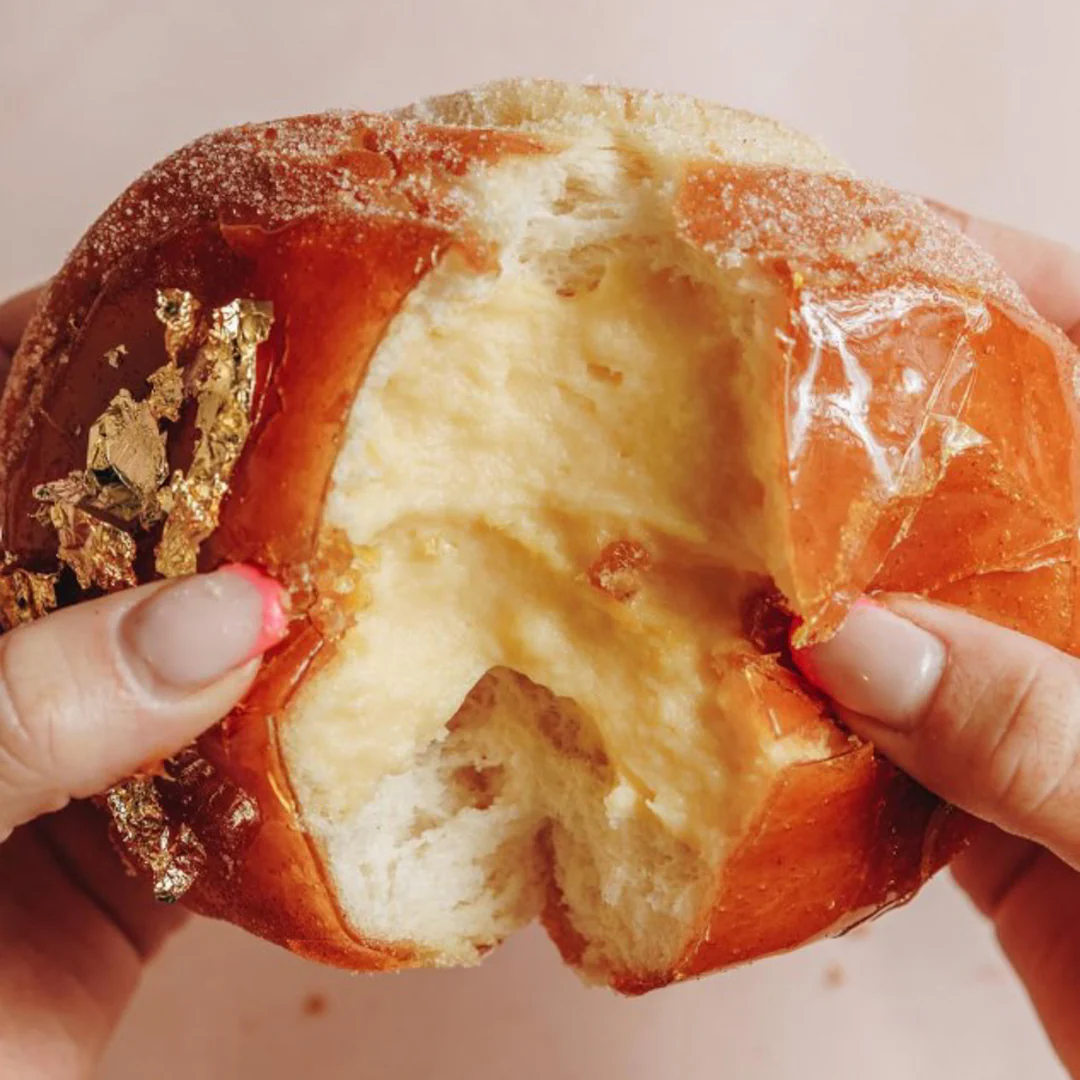
For bakers, the crack is more than a gimmick. It is a texture contrast that makes a creme brulee donut feel like dessert and pastry in one bite.
What exactly is the “crack” on a creme brulee donut?
The “crack” is a brittle sugar crust that fractures into clean shards. It forms when sugar melts, browns, and then cools into a glassy layer on top of the donut.
A proper creme brulee donut crack should feel thin, not sticky. If it bends or goes chewy, the sugar has absorbed moisture or did not caramelise fully.
Why does caramelised sugar turn hard instead of staying syrupy?
Caramelised sugar hardens because, once melted, it becomes an amorphous candy as it cools. There is no time for crystals to form if it cools quickly and stays low in moisture.
Humidity matters in many Australian kitchens, especially coastal ones like Sydney, Brisbane, and Perth. The more moisture in the air, the faster the crust pulls in water and softens.
Which sugar creates the best crack for a creme brulee donut?
Most bakers use caster sugar because it melts quickly and browns evenly. Some prefer raw sugar for deeper flavour, but larger crystals can caramelise unevenly and create thick, patchy spots.
If they want a consistent crack on a creme brulee donut, fine sugar is usually the safest option. A thin, even layer also helps the crust shatter rather than snap in chunky pieces.
How does the thickness of the sugar layer change the crack?
A thin layer cracks cleanly and feels delicate. A thick layer can be tooth-hard at first, then turn sticky as it sits.
For a creme brulee donut, the goal is a crust that breaks with minimal pressure. If they need to “work” to bite through it, the sugar layer is likely too thick or overcooked.
How do bakers caramelise the sugar on a creme brulee donut?
They typically use one of three methods: a blowtorch, a hot spoon, or a caramel dip. Each can work, but each changes the texture and timing of the crack.
A blowtorch is popular in Australian cafes because it is fast and controllable. The key is moving heat constantly so the sugar browns without scorching the donut’s surface.
Why does moisture ruin the crack so quickly?
Sugar is hygroscopic, meaning it grabs water from fillings, glazes, and the air. That water dissolves the brittle crust and turns it into a tacky film.
This is why a creme brulee donut often has its crack at peak quality right after finishing. The longer it sits in a display fridge or takeaway box, the more the crust softens.
How does the custard filling affect the crack?
Custard adds moisture and heat sensitivity. If the custard is warm, or if it leaks onto the top, it can dissolve the sugar crust from underneath.
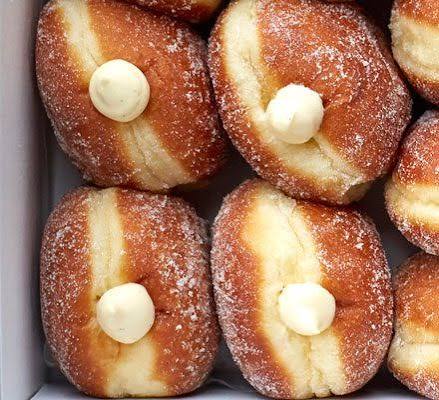
In a well-made creme brulee donut, the custard stays cool and contained, usually piped into the side or base. That keeps the sugar layer drier, so the crack lasts longer.
Does the donut style change how the crack behaves?
Yes, because dough type changes surface moisture and fat. Brioche-style donuts are common in Australia and tend to be rich and soft, which can release a little surface oil.
That oil can help resist moisture, but it can also interfere with sugar adhesion if the surface is too greasy. For a creme brulee donut, many bakers lightly blot the surface or allow the donut to cool fully before adding sugar. Following donut sugar coating tips can help create a more even, crisp topping.
What role does temperature play when forming the crack?
Temperature controls melt, browning, and set. Sugar needs enough heat to liquefy and caramelise, then it needs a short cool-down to turn brittle.
If they torch sugar on a cold donut straight from the fridge, they may get uneven melt. If they torch on a warm donut, the crust may stay soft longer and absorb moisture faster.
Why do some creme brulee donut toppings go bitter?
Bitterness usually comes from scorching. Sugar moves from golden to burnt quickly once it passes the right caramel stage.
A good creme brulee donut crust should taste toasted and fragrant, not smoky. Many Australian pastry chefs aim for an even amber colour and stop before any black spots appear.
Is a blowtorch always the best tool for the signature crack?
A blowtorch is convenient, but not always the most consistent. Some torches run too hot, or have uneven flames, especially cheaper kitchen models.
For a café producing a high volume of creme brulee donut orders, a controlled salamander grill or consistent torch setup can help reduce burnt patches. A reliable creme brulee donut technique focuses on even heat application, because consistency is what creates a predictable crack.
How do bakeries keep the crack crisp for longer in Australian conditions?
They usually finish to order, limit humidity exposure, and separate wet elements from the crust. Some also adjust display practices to avoid condensation.
If they must pre-finish a creme brulee donut, they may store it in a drier area rather than a cold, damp fridge. Cold storage can cause sugar to sweat when it returns to room temperature.
Can they make the crack without a torch at home?
Yes, but it takes care. A hot metal spoon pressed onto sugar can melt and brown it, though it is harder to keep even.
Another approach is making a thin caramel sheet on baking paper, then placing shards on a creme brulee donut. It delivers a dramatic crack, but it is less “true brulee” because the sugar is made separately.
What makes a cafe-style creme brulee donut different from a home version?
Cafe versions are designed for speed and repeatability. They often use chilled pastry cream, measured sugar coverage, and a torch technique that staff can replicate.
Home versions can taste amazing, but the crack is harder to time. A creme brulee donut is at its best in a narrow window, and cafes build service around that timing.
Why does the crack sound louder on some donuts?
Loud crack usually means a thinner, drier caramel layer. A softer sound suggests the sugar has absorbed moisture and become flexible.
Surface shape matters too. A flatter top lets sugar spread thinly, which can make a creme brulee donut crack more dramatically than a domed top with uneven sugar thickness.
How can they tell if the sugar is properly caramelised?
They can judge by colour, smell, and texture. The surface should be an even amber, smell like toasted caramel, and set hard within a minute or two.
If it stays tacky, the sugar may not have reached full caramel stage, or the environment is too humid. For a creme brulee donut, quick setting is the sign the crack will be crisp.
What are common mistakes that stop the crack from forming?
The big ones are too much sugar, too much moisture, and uneven heat. Another common issue is torching too slowly, which warms the donut and encourages moisture migration.
If they are making a creme brulee donut at home, they should cool the donut fully, apply a thin sugar layer, then caramelise fast with steady movement.
What should they expect when eating a well-made creme brulee donut?
They should get a clean shatter first, then soft dough, then smooth custard. The contrast is the whole point, and the crack should never feel rubbery or wet.
A great creme brulee donut is also balanced. The sugar crust is sweet, so the custard should be rich but not cloying, with vanilla notes that suit Australian café-style desserts.
How can they serve a creme brulee donut so the crack stays crisp?
They should serve it immediately after bruleeing. If it is takeaway, a vented box helps reduce trapped steam, and keeping it out of direct sun matters in Australian heat.
If they are plating it at home, they should brulee last and eat straight away. A creme brulee donut is one of those pastries where timing is part of the recipe.
What is the simplest takeaway about the signature crack?
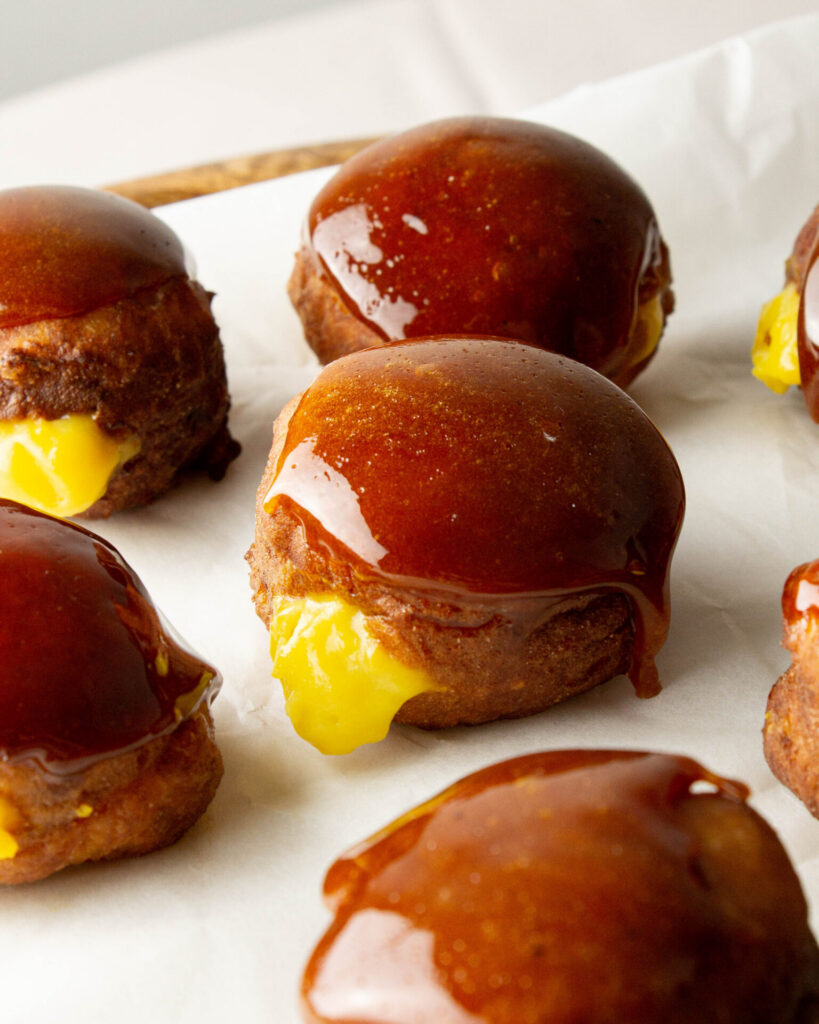
The signature crack comes from thin, evenly caramelised sugar that cools into a dry, brittle shell before moisture can soften it. When everything is timed right, a creme brulee donut delivers that satisfying shatter that people chase, making it a memorable option when ordering fresh treats for same-day delivery.
In short, the crack is chemistry plus technique. In Australia’s often humid conditions, the best results come from finishing fast, keeping moisture away, and serving immediately.
FAQs (Frequently Asked Questions)
What is the signature “crack” on a creme brulee donut and how is it formed?
The “crack” on a creme brulee donut is a thin, brittle sugar crust that shatters into clean shards when bitten. It forms by melting sugar until it caramelises, then cooling quickly to create a glassy, hard layer on top of the donut. This texture contrast makes the donut feel like both dessert and pastry in one bite.
Why does caramelised sugar harden instead of remaining syrupy on a creme brulee donut?
Caramelised sugar hardens because once melted and browned, it cools quickly into an amorphous candy without forming crystals. Low moisture and fast cooling are essential; otherwise, humidity causes the sugar to absorb water and soften. This is especially important in humid Australian climates like Sydney or Brisbane.
Which type of sugar is best for achieving the perfect crack on a creme brulee donut?
Most bakers prefer fine caster sugar because it melts quickly and browns evenly, producing a consistent thin crust that shatters delicately. Raw sugar can add deeper flavor but may caramelise unevenly due to larger crystals, resulting in thick or patchy spots.
How does the thickness of the caramelised sugar layer affect the crack texture on a creme brulee donut?
A thin layer of caramelised sugar cracks cleanly and feels delicate, breaking with minimal pressure. A thick layer tends to be tooth-hard initially but can become sticky as it sits. Overly thick or overcooked layers require more effort to bite through and detract from the ideal crisp texture.
What methods do bakers use to caramelise sugar on creme brulee donuts, and which is most popular in Australia?
Bakers typically use one of three methods: a blowtorch, a hot spoon, or dipping in caramel. In Australian cafes, blowtorches are popular because they offer fast, controllable heat that browns sugar evenly without scorching the donut’s surface when moved constantly.
How does moisture impact the durability of the crack on a creme brulee donut?
Moisture quickly ruins the brittle sugar crust because sugar is hygroscopic—it absorbs water from air, fillings, or glazes. This dissolves the crust into a tacky film. Therefore, the crack is at its peak quality immediately after finishing and softens over time in display fridges or takeaway boxes.